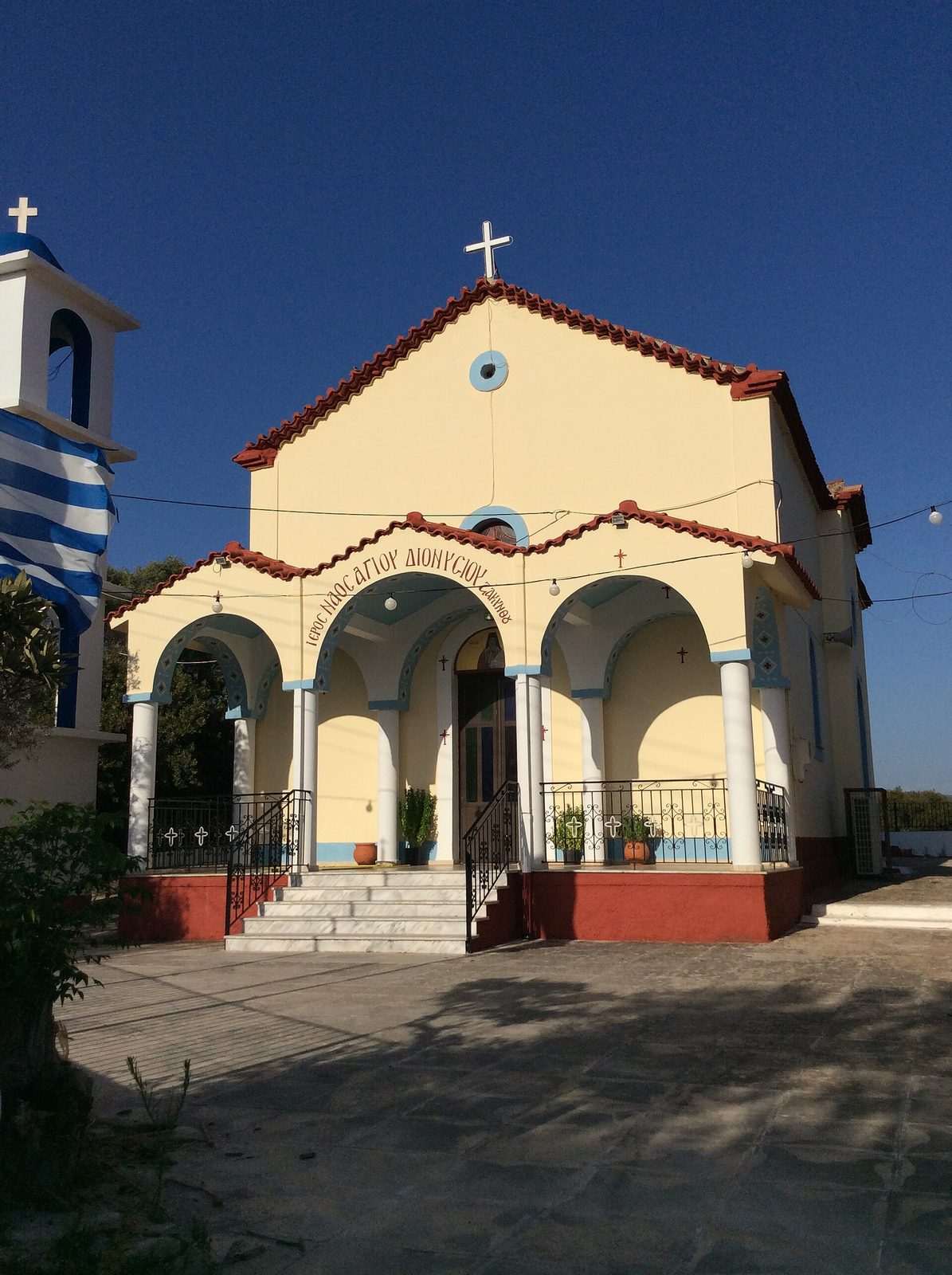
If Easter is the most heartfelt festival of the year, 15 August marks the very middle of the Greek summer. Dekapentavgoustos, literally “the fifteenth of August”, is the feast of the Dormition of the Virgin, a day when the whole of Greece stops and goes on the move.
The meaning of the date
On 15 August the Orthodox Church celebrates the Dormition of the Theotokos, the Mother of God. It is one of the great feasts of the liturgical year, preceded by a two-week fast, and the churches dedicated to the Virgin, of which there are a great many in Greece, celebrate their patronal feast on that day.
It is also the day when, by tradition, people with names linked to the Virgin celebrate their name day: and in Greece a name day counts for more than a birthday.
The panigiria
The religious service is the focus of the panigiri, the village festival. The format is much the same everywhere: the liturgy, then long tables set up outdoors in the square or the churchyard, live music on traditional instruments, and circle dances that go on until late into the night. Everyone takes part, from children to the elderly, and there is no line between those who watch and those who dance.
In the villages of Messinia the panigiria are still the real thing, organised by local communities for themselves and not for tourists. If you happen to be in a village on the evening of 15 August and feel like staying, you will generally be made welcome: just respect the context and don't treat it as a show.
What travelling in mid-August involves
The week around 15 August is the absolute peak of the Greek tourist season, and not only for foreigners: it is when the Greeks themselves go on holiday en masse. Roads are busy in the days immediately before and after, ferries are full and the best-known beaches fill up early in the morning.
On the other hand, it is also when the atmosphere is at its most intense: every village has something on, the evenings are long and there is an energy you won't find the rest of the year. Accept the context and you will be rewarded.
How a panigiri works
The panigiri follows a pattern that repeats from village to village. It begins with the liturgy, usually in the morning, and in the afternoon the festivities move outdoors: to the square, the churchyard or a municipal space set up for the occasion. The tables are long and shared, the food is served without much ceremony, and bands play live.
The dances are in a circle or a line, with steps everyone knows and that you pick up by watching. There is no moment when the festival “starts”: at some point in the evening the dance floor simply fills up and stays full until late into the night.
The rest of the week
If you are travelling at this time, bear in mind that 15 August is not an isolated day but the centre of a busy week. In the days immediately before and after, the main roads of the Peloponnese are busy, because half of Athens heads off to their home villages and then comes back again.
The answer is simple: don't plan long journeys on those two or three days, do your shopping in advance and enjoy the area without moving around too much. With beaches a few kilometres away and a garden to relax in, it is less a sacrifice than a sensible choice.
If you are staying here, the best formula is simple: the beach very early in the morning, rest in the garden during the hottest hours and the village in the evening. That is exactly the rhythm the Greek August is meant to be lived at.
August without the stress
With the Jacuzzi in the garden, the barbecue area and beaches a few kilometres away, the house lets you enjoy high season without spending your days in queues.
And in the house you will find the extra virgin olive oil and the soap made from the olives of our own grove.