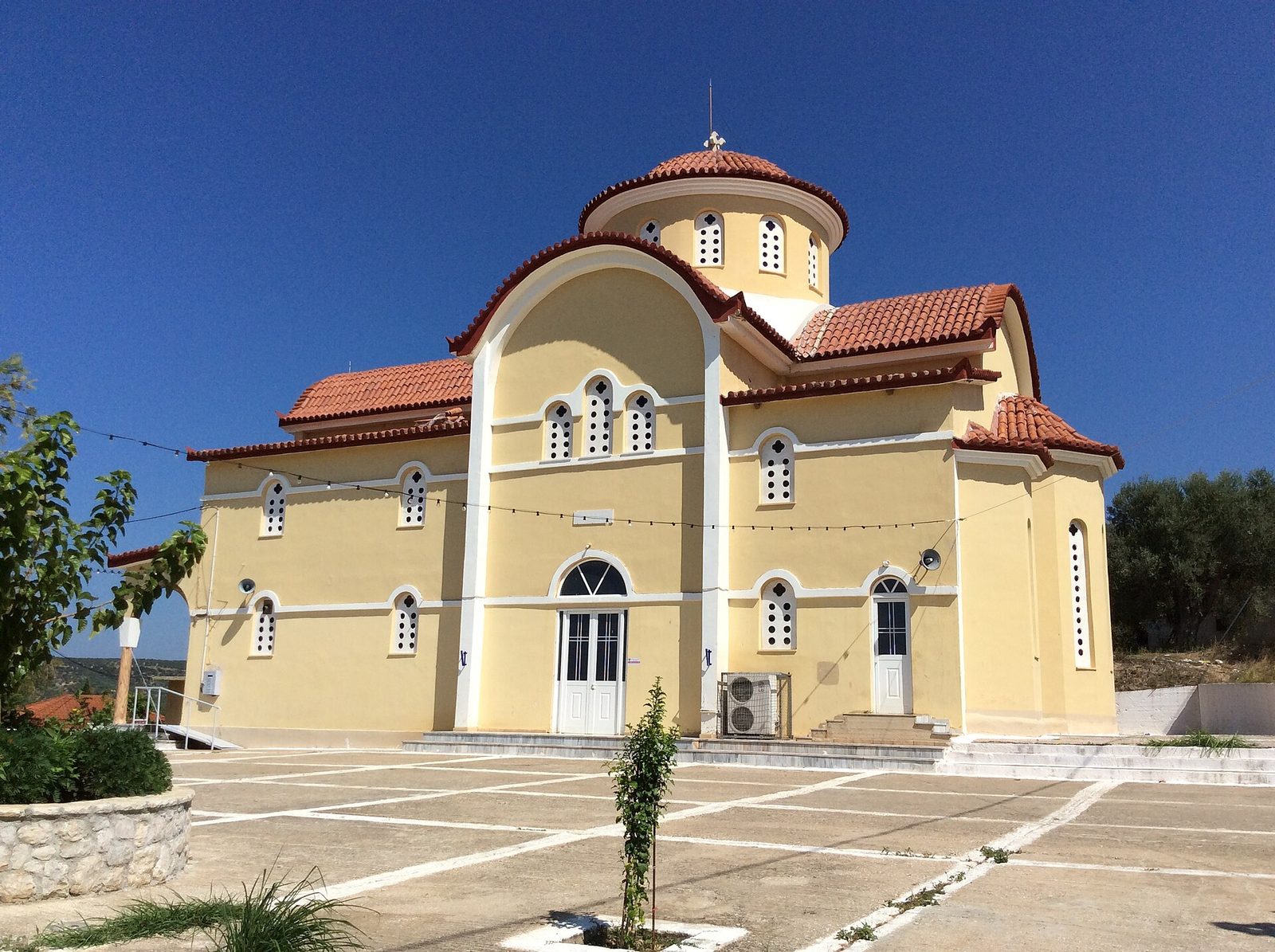
If there is one celebration that explains Greece better than any other, it is Easter. Not Christmas, not New Year: Orthodox Easter is the time of year when the villages fill up, people who live in Athens go back to their parents’ village and, for a few days, everything else stops.
A date that moves
The first thing to know is that Orthodox Easter is calculated differently from Catholic Easter: some years the two coincide, but much more often it falls one or more weeks later. If you are planning a spring trip to Greece, it is a good idea to check this year’s date in advance, because it affects everything: traffic, availability, and the opening hours of shops and offices.
Holy Week
The days that really matter are the last three. On the evening of Good Friday, every village holds the procession of the Epitaphios: the symbolic bier of Christ, decorated with flowers by the women of the parish, is carried through the streets, followed by the faithful holding candles. In small villages the procession winds through the whole village and draws a huge crowd, even people who never go to church.
On Holy Saturday the service reaches its climax at midnight with the Anastasi, the announcement of the Resurrection: the lights go out, the flame passes from candle to candle until it fills the church, and outside the fireworks and firecrackers go off. Straight afterwards, at home, the fast is broken with magiritsa, the traditional soup, and with red eggs, which people crack against each other in a contest.
Lamb Sunday
Sunday is the day spent outdoors. All over the Greek countryside the spits are lit for the lamb, families eat together from late morning into the afternoon, and there is drinking, singing and dancing. It is the longest lunch of the year, and in villages like those of Messinia the aroma reaches everywhere.
If you travel during those days
Travelling in Greece during Easter week has its pros and cons. The advantage is obvious: you witness something genuine that is not staged for tourists. The drawback is practical: many shops and services close on the main days, traffic to the villages is heavy and it is best to do your shopping in advance.
The weather, on the other hand, is ideal: Messinia in spring is green and in bloom, with mild temperatures and a countryside that is already starting to dry out in the weeks that follow. It is also the time when the beaches are still empty.
The festive table
Greek Easter has a fairly precise sequence of dishes. The preceding weeks are a time of fasting, which in Orthodox practice means abstaining from meat, dairy and eggs: it is the period when meatless cooking is at its best, with vegetables, pulses and dishes made with wild greens.
The fast is broken straight after the midnight service on Holy Saturday, with magiritsa, a soup made with lamb offal, eggs and lemon. It is a dish that divides even the Greeks, but it is the sign that the celebration has begun. On the table there are eggs dyed red, which people crack against each other in a contest, and tsoureki, the sweet braided bread.
Sunday is the day of lamb on the spit, slow-cooked outdoors for hours, and of kokoretsi. Families sit down to eat in the late morning, and carry on from there.
A practical tip
Staying in a house with a kitchen and a barbecue over Easter has an advantage: you can do your shopping beforehand, since many businesses close on the main days of the holiday, and organise things your own way. In the days before, butcher’s shops are packed and sell almost nothing but lamb: it is best to go early and without hurrying.
Spring in Messinia
With its fully equipped kitchen and the barbecue area in the garden, the house is well suited to the holidays. Two bedrooms, up to six guests, among olive and fruit trees.
And in the house you will find the extra virgin olive oil and the soap made from the olives of our own grove.