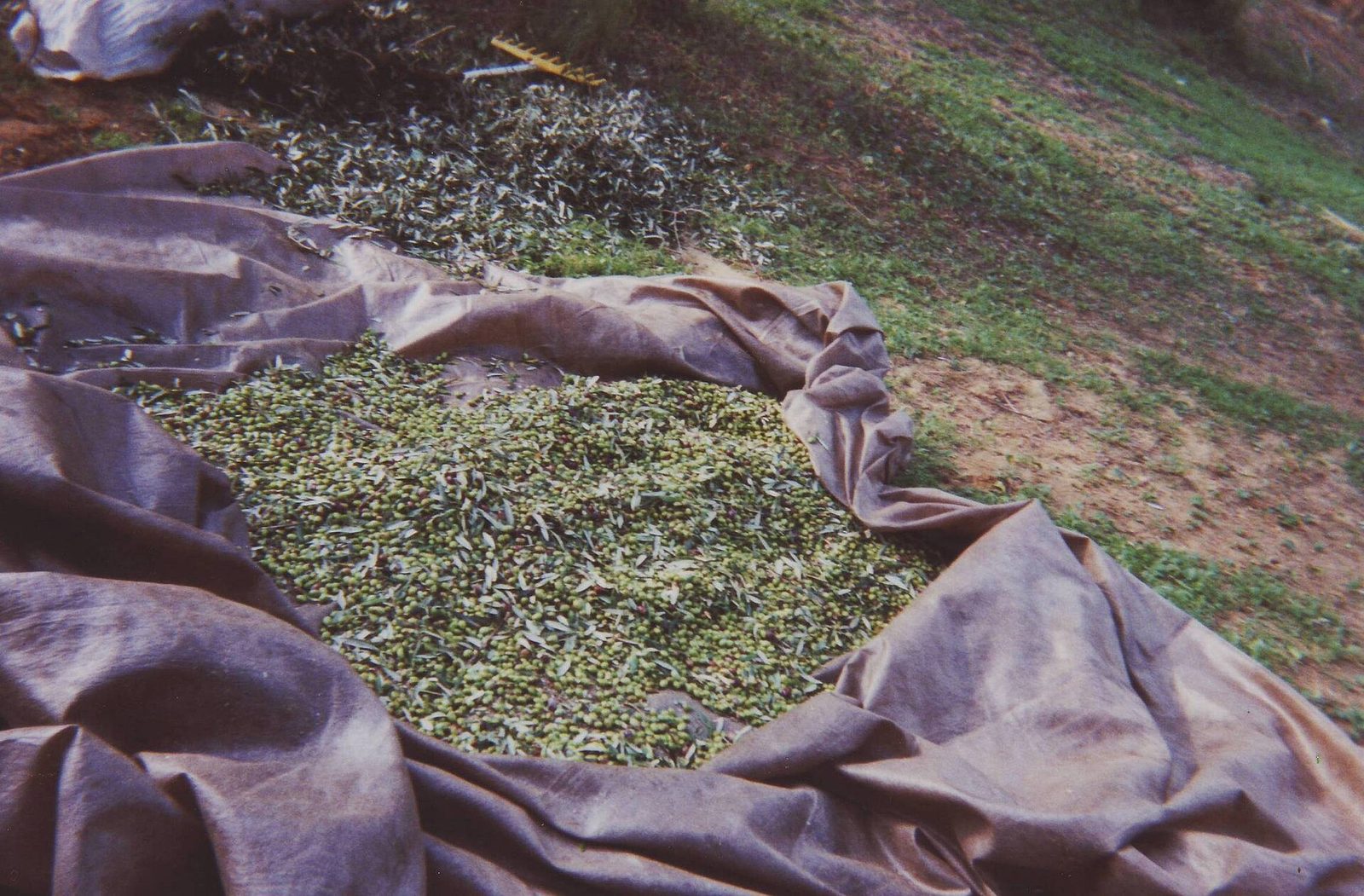
If you come to Messinia in summer, you see the olive groves as a backdrop: silvery green everywhere, all the way to the sea. If you come in autumn, you see them at work, and that is a whole different thing. From October to January, depending on the year and the area, the olive harvest is what sets the pace of the entire region.
How the olives are harvested
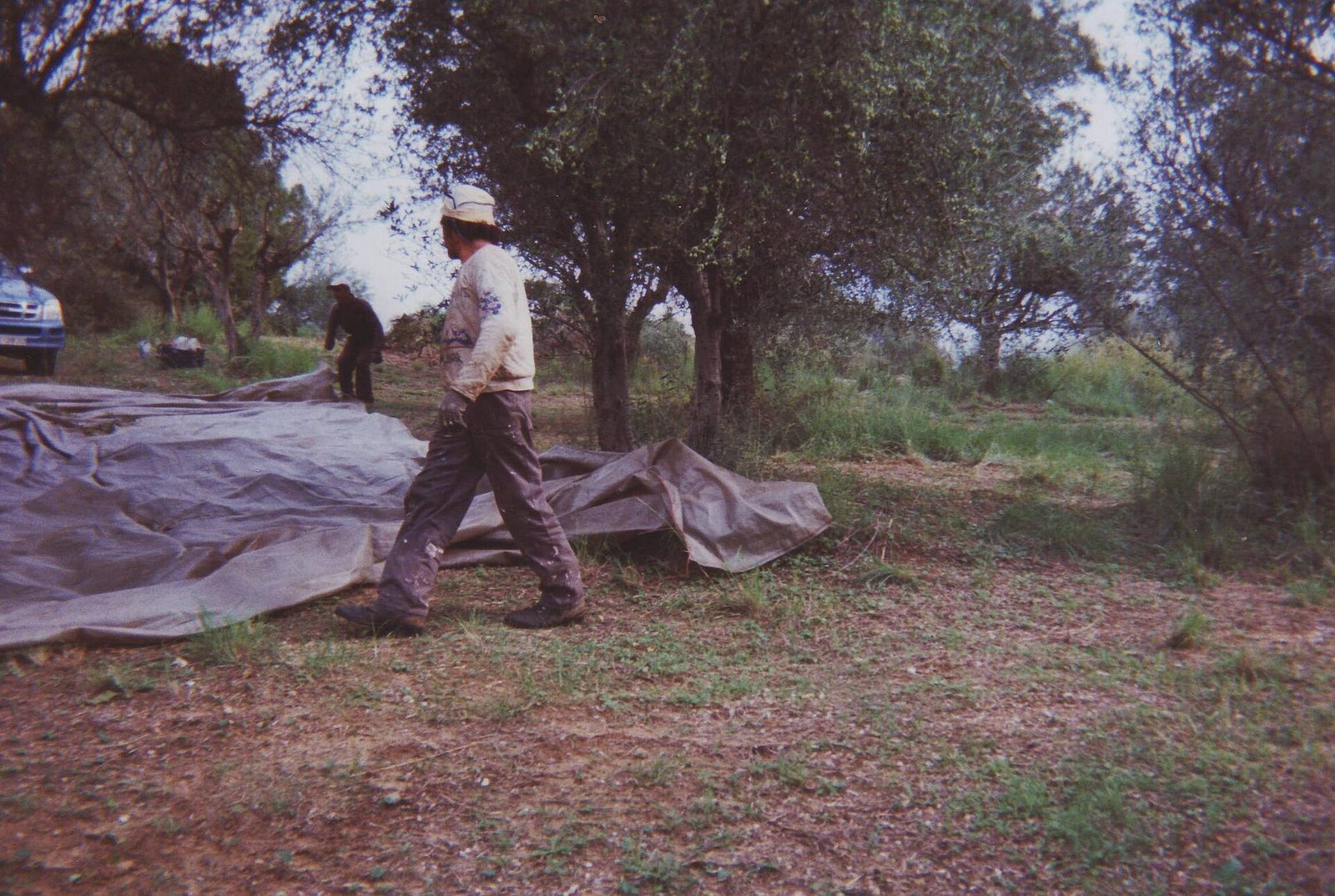
The basic method has not changed much. Large nets are spread under the trees, the olives are knocked from the branches and everything is gathered on the net, which is then emptied into crates. What has changed are the tools: hand rakes have been joined by mechanical harvesters, which vibrate among the branches and speed up the work considerably.
It is work that involves the whole family and is done on good days, because rain stops everything. Driving along the inland roads at this time of year, you constantly come across nets spread out, small vans loaded with crates and groups of people under the trees.
The olive mill
From the field the olives go to the mill, and they have to get there quickly: the more time passes between picking and milling, the more the quality of the oil drops. That is why, at the height of the harvest, the mills in the area run round the clock, often through the night, and the villages are filled with the unmistakable smell of olive paste.
The oil produced in this season is the new oil: deep green, cloudy, with a peppery tickle in the throat that is the sign of freshness. Tasting it freshly milled, on a piece of bread, is one of those experiences that changes your standards for good.
The local variety
Messinia is one of the most important olive-growing regions in Greece. The dominant variety for oil is Koroneiki, with its small fruit, while the large, elongated black table olive bears the name of Kalamata, the regional capital. They are two different products with two different purposes, but they tell the same story: here the olive tree is not scenery, it is the economy.
What it means for travellers
Coming to Messinia during the harvest means finding a countryside full of life and villages working at full tilt even out of season. The autumn weather is mild, the sea stays swimmable for much of October, and the beaches that are crowded in summer are empty.
If you would like to see the work up close, ask around locally: many mills welcome visitors when they are in operation, but it depends on the year and the workload, and has to be arranged case by case.
Why the harvest starts early
One of the choices that sets one oil apart from another is when the olives are picked. Olives harvested early, still green or just turning colour, yield less oil but a product much richer in polyphenols: more bitter, more peppery, longer-lasting. Those harvested late, black and fully ripe, give a higher yield but a sweeter, more fragile oil.
Producers who aim for quality therefore accept giving up part of the crop in exchange for better oil. It is an economic choice even before it is a gastronomic one, and it is why the season starts as early as October instead of waiting for the olives to ripen fully.
What happens after milling
Fresh from the mill, the oil is cloudy, because it still contains particles of pulp and vegetation water. Many producers leave it to settle for a few weeks before bottling it; others sell it as it is, unfiltered, which is how many Greeks like it at exactly this time of year.
The oil must then be stored away from light and heat: that is why serious bottles are dark and tins remain the best container. A good oil left on a shelf near the cooker is, within a few months, no longer a good oil.
A house among the olive trees
The garden of Navarino Greek House is an olive grove with fruit trees, a barbecue area and a hot tub: in autumn, the best place to understand this land.
And in the house you will find the extra virgin olive oil and the soap made from the olives of our own grove.