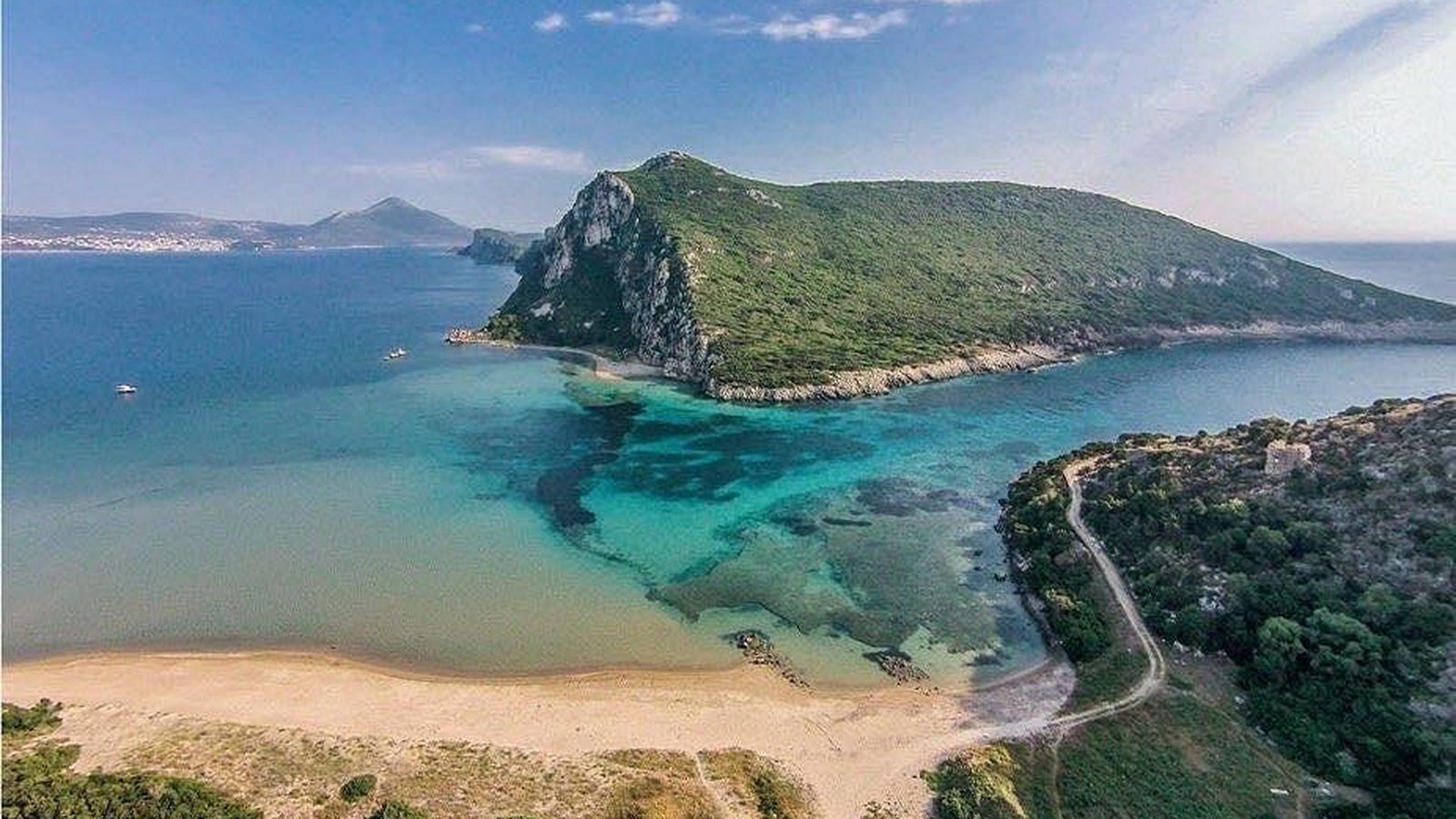
Behind Voidokilia beach, separated from the sea by a strip of dunes, lies Gialova Lagoon. Driving past, you see it as a stretch of shallow, still water, almost nondescript. In reality it is one of the most important wetlands in the Mediterranean, and the southernmost in the entire Balkan peninsula.
Why it matters so much
The reason lies in geography. The lagoon sits right on the migration route linking Africa and Europe: for a great many species it is the first stop after crossing the Mediterranean, or the last before tackling it. As a result, a tiny patch of land holds a density of bird life found nowhere else.
More than two hundred and fifty species have been recorded: flamingos, herons, black-winged stilts, ospreys, ducks and waders of every kind. The mix changes radically with the seasons, and that is what makes the lagoon interesting at any time of year.
The chameleon
The best-known curiosity, however, is a reptile. A population of African chameleons lives in the lagoon area, the only stable population of this species in Europe. Spotting one is far from easy, as they are well camouflaged, slow and shy, but knowing they are there changes the way you look at the scrub around the paths.
How to visit
You can walk around the lagoon on the paths along its edge, with no difficult sections. The best times are dawn and late afternoon, when the birds are active and the light on the still water is at its finest. Binoculars completely change the experience: without them you see distant shapes; with them you see what is really there.
The best seasons are spring and autumn, when migration is in full swing. In summer activity drops off and the middle of the day is out of the question, but a walk at sunset is still pleasant, with insect repellent in your pocket.
A unique system
It is worth looking at the whole picture: dunes, lagoon, beach and the headland of Navarino Castle form one continuous natural system, protected by the EU Natura 2000 network. That is why Voidokilia has no beach clubs and the lagoon has no buildings, a rare stroke of luck on such a beautiful stretch of coast.
When to look, and what for
The bird life changes with the calendar, and knowing what to expect helps. In spring, migrants heading north pass through, often in large flocks and for short periods: it is the most spectacular season but also the most unpredictable. In autumn the passage is more spread out and lasts longer.
In winter the lagoon hosts wintering populations, with ducks and waders that stay for months; in summer activity is reduced and resident species make up most of what you see. The flamingo, the image most associated with the lagoon, is present at some times of year and not at others: it is not guaranteed, and it is only fair to know that beforehand.
Gialova, the village
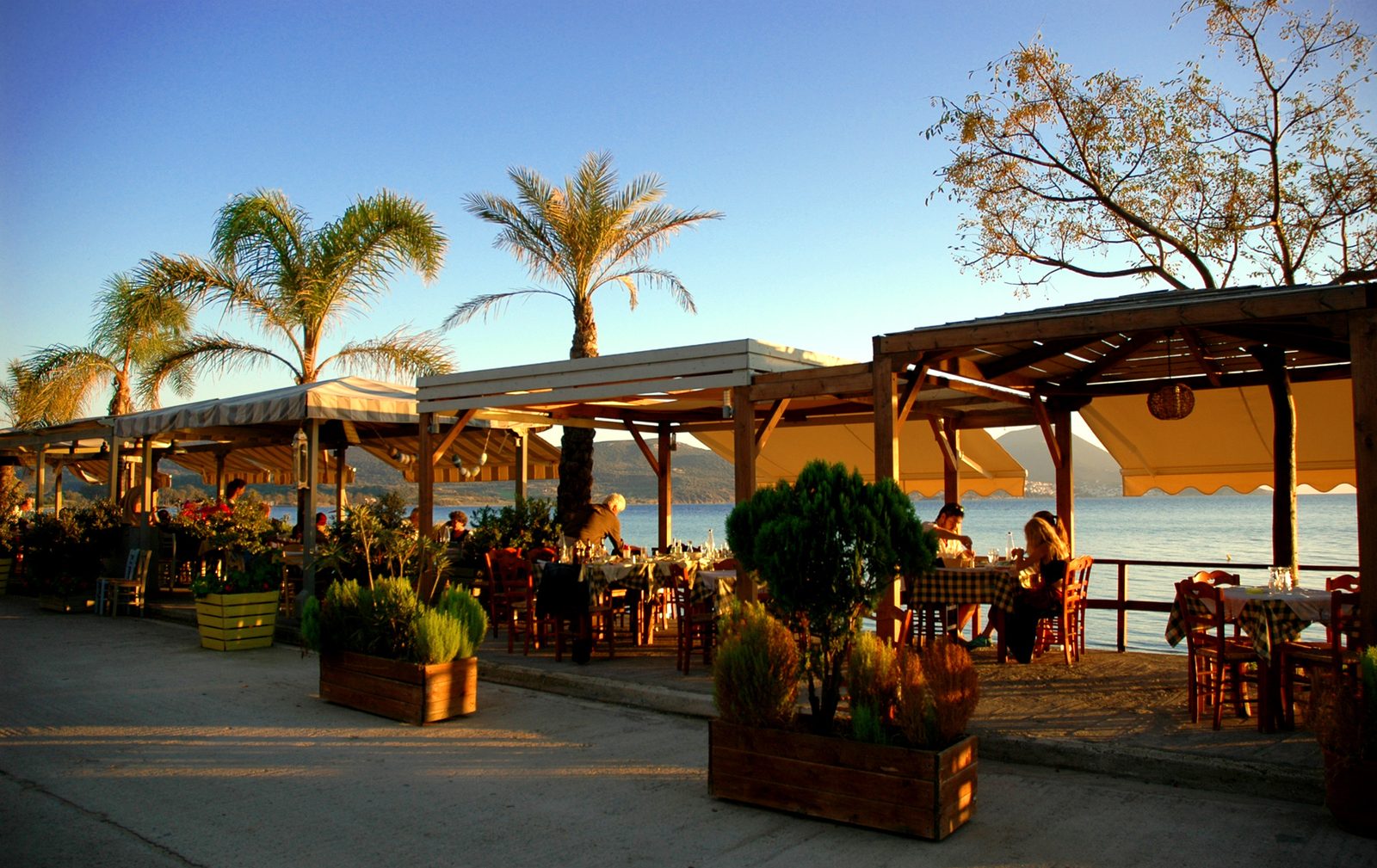
The village of Gialova sits on Navarino Bay, not far from the lagoon that bears its name. It is a small place with a seafront and tavernas looking onto the water, which has grown over recent decades as a base for visitors to this stretch of coast.
It is the natural place to stop after a morning's birdwatching or a day at Voidokilia: it lies between the two, and the view across the bay from the seafront is one of the widest in the area.
A fragile balance
Mediterranean wetlands are among the habitats that have suffered the greatest losses over the last century, drained to make way for farmland or building land. That one of such importance survives at Gialova, with the beach and dunes in front of it still intact, is the result of specific and relatively recent conservation decisions.
For visitors this comes down to a few common-sense rules: stay on the paths, keep out of the reed beds, don't fly drones over the water and keep dogs on a lead. These are the same things that will allow those who come next year to see what we see now.
A few kilometres from the lagoon
From the house, Gialova and Voidokilia are a few minutes' drive away: head out at dawn with your binoculars and be back for breakfast in the garden.
And in the house you will find the extra virgin olive oil and the soap made from the olives of our own grove.