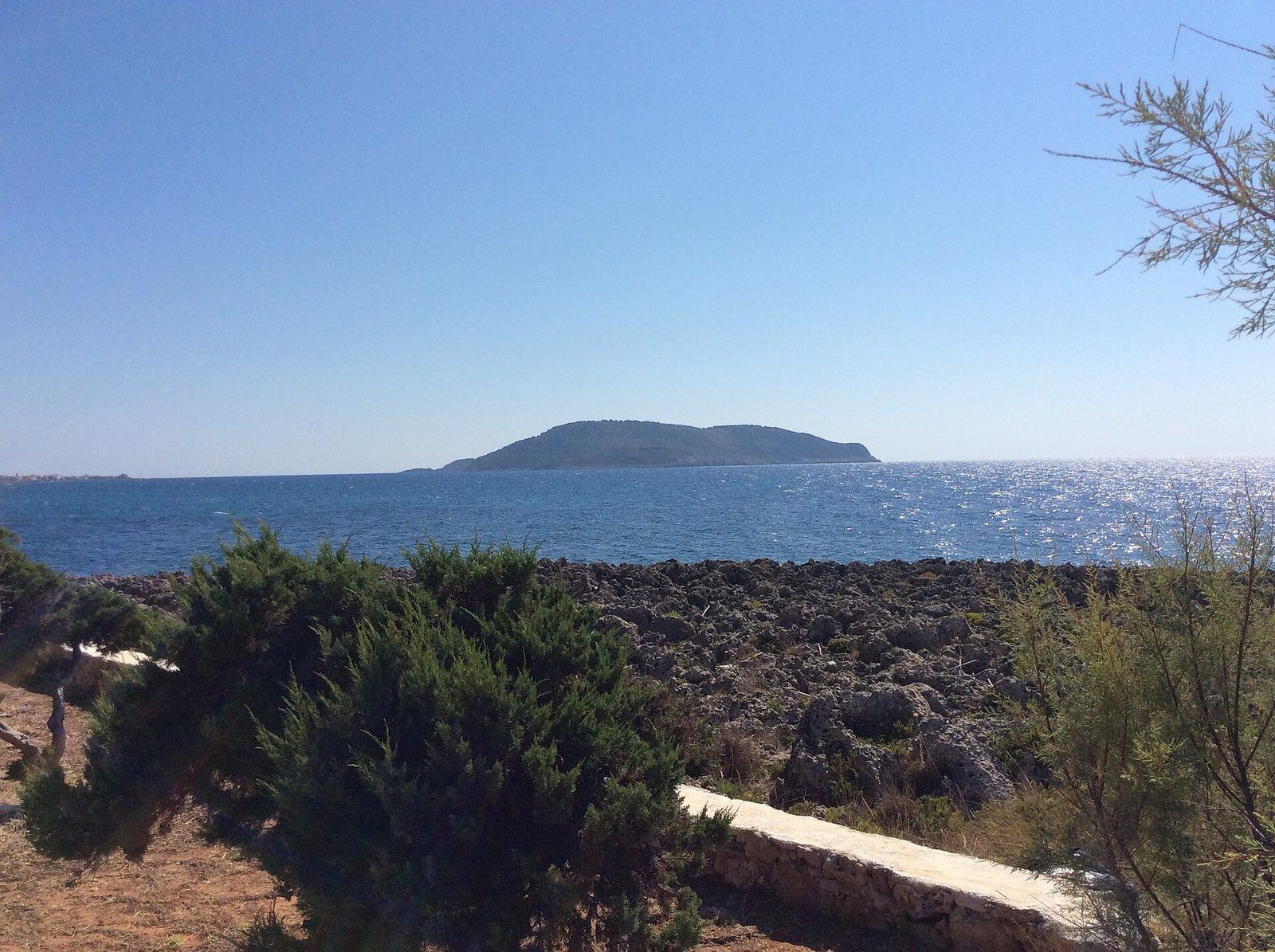
Marathopoli is the nearest village to the house: five kilometres, just time enough to drive down before dark. It is not a resort built for the summer, but a fishing village that has opened up to the beach season without changing its nature.
The village
The layout is classic Ionian coast: a short seafront, boats pulled up on the shore or moored, low houses and tavernas that open towards evening with their tables almost on the water. There are shops for daily groceries and fish to buy, which is why everyone staying nearby passes through.
It is also where you get a feel for the local rhythm: early morning is for work on the sea, the middle of the day is deserted, and life picks up again when the sun begins to go down.
The island offshore
A couple of miles off the coast lies the uninhabited island of Proti, which closes off the horizon and creates a channel of sheltered water between itself and the mainland. This is what gives Marathopoli its character: the sea here is not open, it is a protected expanse, and on windy days you notice the difference.
The island is known to scholars for a curious reason: in one of its coves, historically used as a safe anchorage, inscriptions have been found that were left over the centuries by sailors who took shelter there. A record of passages carved into the rock, showing how busy this stretch of sea has been since antiquity.
Proti has no scheduled boat service. If you want to get closer, you need to find someone running boat trips locally, and what is on offer depends on the season and sea conditions: it is something to ask about in the village, not to take for granted.
The sunset
The best time to be in Marathopoli is late afternoon. The sun sets behind the outline of the island, the water in the channel stays calm and the tavernas begin to fill. This is the sunset you get around here, and it is not like one on an open coast: there is a dark silhouette in the middle, and it changes everything.
The channel and the wind
The stretch of water between Marathopoli and Proti Island is the defining feature of this part of the coast. Sheltered by the island, it stays calm even when the open sea is rough, which makes it one of the best alternatives on windy days, when the west-facing beaches become unpleasant.
Historically the channel served as an anchorage, and it is still where you see the village boats moored today. Look at the sea with a sailor's eye and the reason is obvious: it is one of the few natural shelters on this coast.
The rhythm of the village
Marathopoli is not a place where you “do things”, and that is exactly why it is worth spending time there. You go to buy fish, to pick up bread, to sit at a taverna table watching the sun go down behind the island. Within a few days you start recognising people, which in a village this size happens naturally.
If you are staying a few kilometres away, it becomes your daily reference point: the place you end up almost every day, without having to plan it.
The surrounding coast
North and south of the village, the coast alternates between sandy and rocky stretches, with access points that are often unsigned and that you only discover by driving the coast road at a leisurely pace. In summer these beaches stay much quieter than Voidokilia, simply because they are not in the guidebooks.
It is the kind of exploring that pays off in this part of Messinia: drive slowly, stop wherever it looks worthwhile and you almost always end up finding a spot with nobody there. With the house a few minutes away, you can even go back for lunch and set off again in the afternoon.
If you are staying here, Marathopoli is your everyday base: groceries, bread, fish for the barbecue in the garden, and dinner on the evenings when you don't feel like cooking.
Five kilometres from the fishing village
Head down to Marathopoli for fish and come back to fire up the barbecue in the garden, under the olive trees. Or stay on at a taverna: it's only five minutes away.
And in the house you will find the extra virgin olive oil and the soap made from the olives of our own grove.