Messinia has a true Mediterranean climate: hot, dry summers, mild, rainy winters, and two long shoulder seasons that are probably its best time of year. Choosing when to come depends almost entirely on one question: how much the sea matters compared with everything else.
Spring: April, May, June
In April the countryside is at its best: green, in bloom, with temperatures that let you walk all day. It is the perfect time for archaeological sites and fortresses, when the sun does not force you indoors at midday. The sea, however, is still too cold for most people.
May is the month when the balance shifts: long days, pleasant temperatures, the first beach days for those who do not feel the cold, and beaches that are still practically empty. June brings real summer without the peak crowds, with the water already warm. For many, it is the best month of all.
Summer: July and August
These are the months of full heat and full tourism. The days are long and the sea is at its best, but the middle of the day needs managing: head to the beach early in the morning, retreat to the shade between noon and four, and go out again in the late afternoon.
The week around 15 August is the absolute peak, with the Greeks themselves on holiday. On the plus side, it is when the villages are at their liveliest and there is something on every evening. In a house with air conditioning, insect screens, a shady garden and a hot tub, summer here is easy to handle.
Autumn: September and October
If you can choose, September is the ideal month. The sea is at its warmest of the year because it has been storing heat all summer, the days are still long, the crowds thin out sharply after the first week and prices come down.
October is still excellent: you can swim for much of the month, the air temperature is ideal for excursions and the countryside enters the olive harvest. The first rains usually arrive towards the end of the month, but they are still occasional.
Winter: November to March
Winter in Messinia is mild by continental standards, but it is the rainy season and the days are short. It is not beach weather, but it is perfect if you are looking for complete silence or want to visit the archaeological sites with no one else around.
It is also the heart of the olive season, and the villages go about their lives as they always have, with nothing put on for visitors.
Wind and sea
One factor that is often overlooked when choosing when to travel is the wind. In summer the meltemi blows across the eastern Mediterranean; it reaches Messinia in a gentler form than on the Aegean islands, but it can still make some days windy. The Ionian coast has the advantage of coves facing in different directions: when one stretch is rough, a few kilometres away you will find a sheltered one.
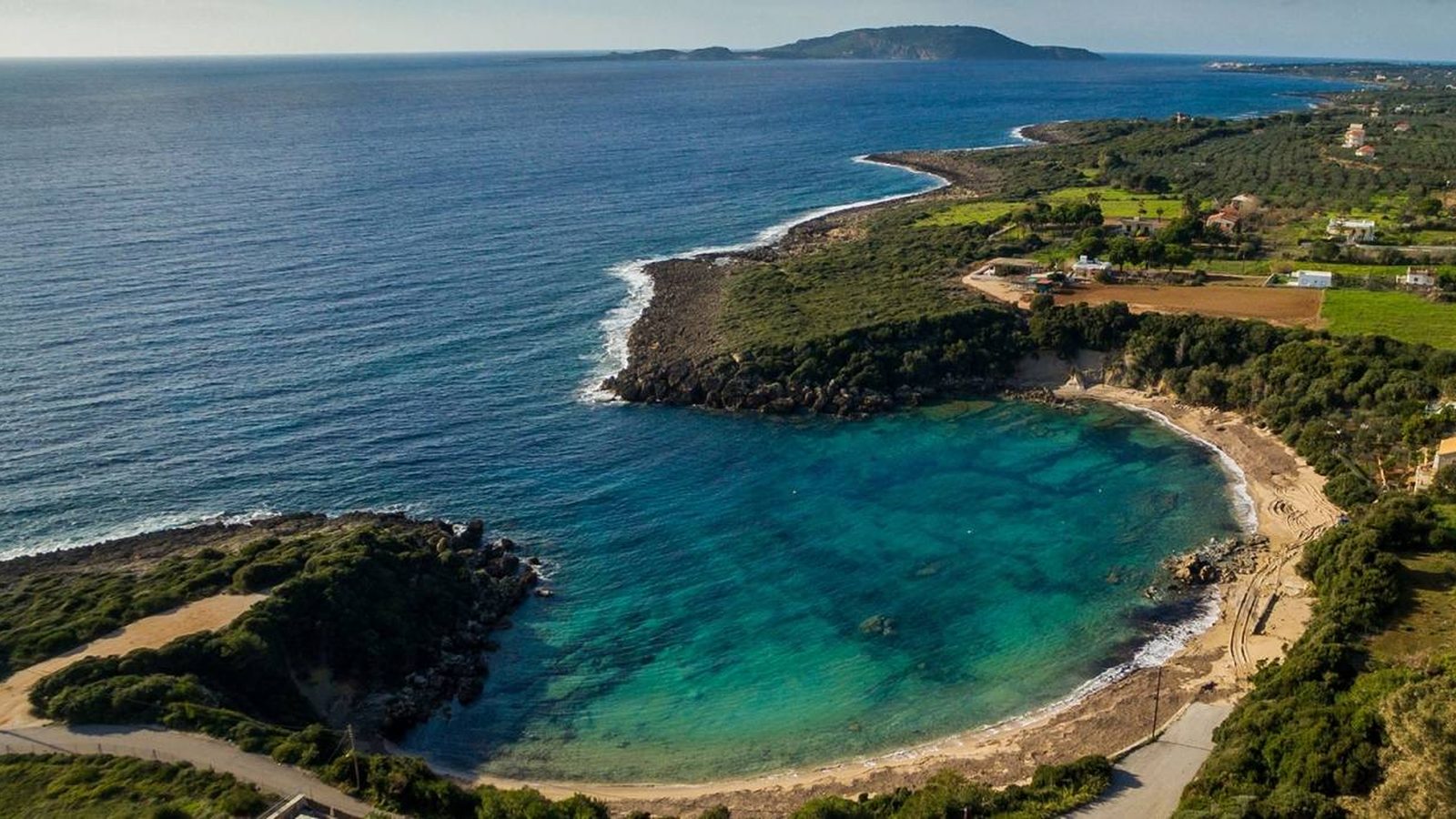
Voidokilia, for example, faces west, while the channel in front of Marathopoli is sheltered by Proti Island. Knowing there is an alternative a few minutes’ drive away saves most bad days.
How the landscape changes
It is also worth considering what the countryside looks like, because it changes radically. In spring Messinia is green, with the vegetation at its peak and everything in flower; from June onwards it starts to dry out, and by August it is golden, almost scorched by the sun. In autumn the first rains bring the green back, and in winter the countryside is lush once again.
If you have in mind the images of Greece in summer, with pale earth in sharp contrast to the sea, you will find them in July and August. If you are after greenery and flowers, come in spring. They are two different countries, and they are the same country.
Open beyond the beach season
Air conditioning for the summer, a fully equipped kitchen and a garden with an olive grove all year round: the house works in every season, with the Jacuzzi always available.
And in the house you will find the extra virgin olive oil and the soap made from the olives of our own grove.